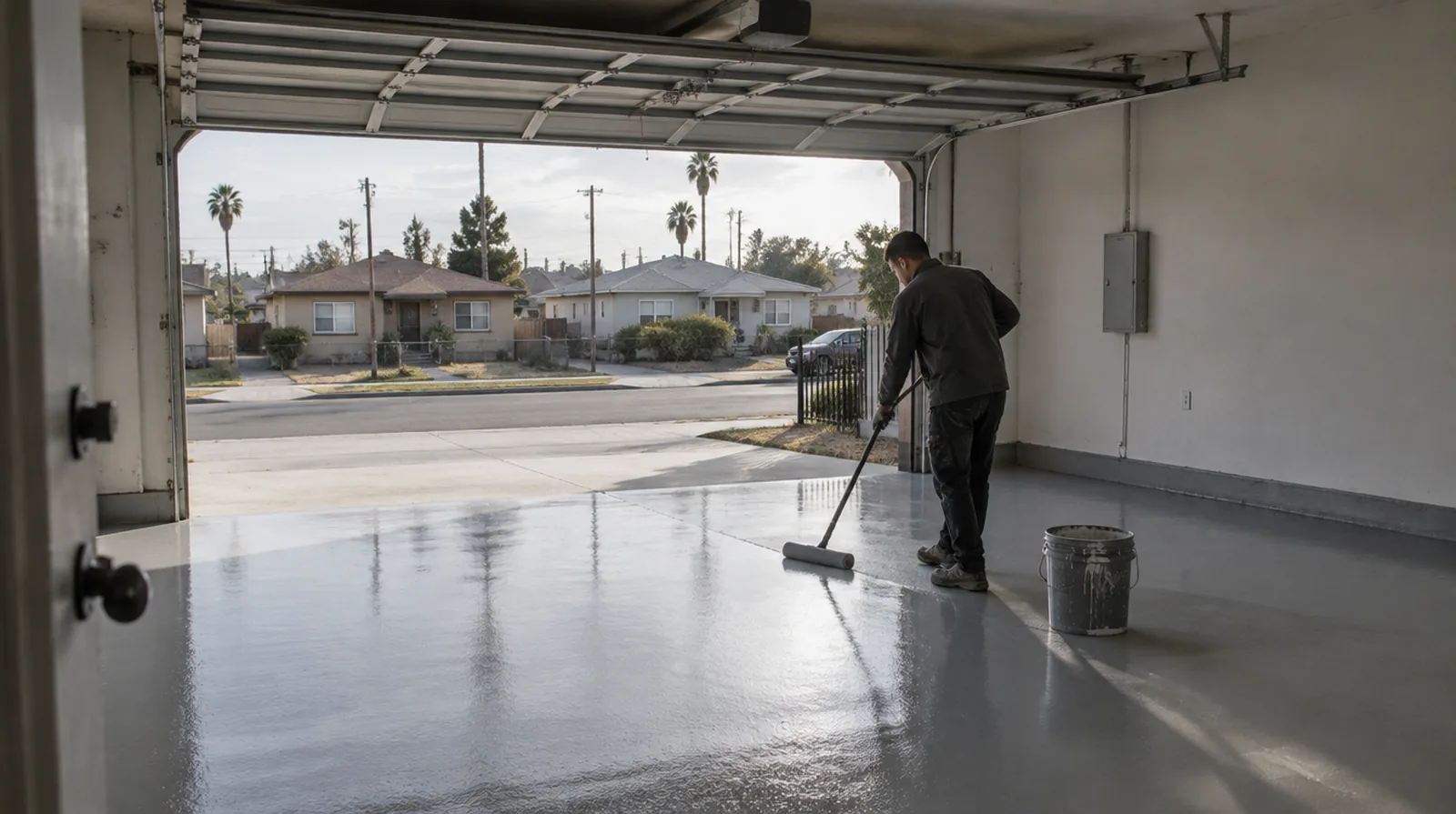
Old slab, new floor
Lynwood garages built in the 1940s and 1950s often have cracked, oil-soaked concrete with broken edges at the door. We grind until we reach clean concrete, degrease where oil has soaked deep, fill cracks and rebuild broken edges with a repair mortar.
A floor built for use
After prep, we roll a primer, a pigmented body coat and, for most garages, a chip broadcast. The final topcoat is chosen for chemical resistance so oil and fluids wipe up.
Jack stands and dropped tools
A thicker system resists point loads from jack stands and impact from dropped wrenches better than a thin coating. We can add extra build in work areas.
Silica safety
Grinding concrete releases silica dust. Our grinders connect to vacuums. OSHA's page on silica explains why.
Will oil stains come through?
Deep oil is degreased and ground. Severe cases may need a special primer.
How long does it take?
About two days, plus a week before parking.
Garage floor epoxy for real working garages
Garage floor epoxy in Lynwood is often going into a garage that sees real work: car repairs, welding, woodworking or weights. We build the system to match. Grinding removes oil and old paint, cracks get filled, and a thick body coat with a tough clear top handles tools, jacks and fluids.
Garage questions
Can I weld on it? Hot slag can mark any coating. Use a welding mat in that area.
Will oil soak in? No, the coating seals the surface so spills wipe up.
Do you coat the driveway too? We usually seal driveways rather than coat them, since full coatings can get slick outdoors.
Alley garages
Many Lynwood garages open to an alley. We park and stage equipment so we do not block neighbors.
From estimate to parking
At the estimate we look at the slab, test moisture and talk about how you use the garage. Install takes one to two days. Foot traffic the next morning, cars a few days later. We leave written times and care tips. If you need the garage back faster, ask about a polyaspartic top that shortens the wait.
Crack repair on old slabs
Wide cracks get a rigid filler if stable and a flexible one if they still move.
Classic cars, project cars and the garages that hold them
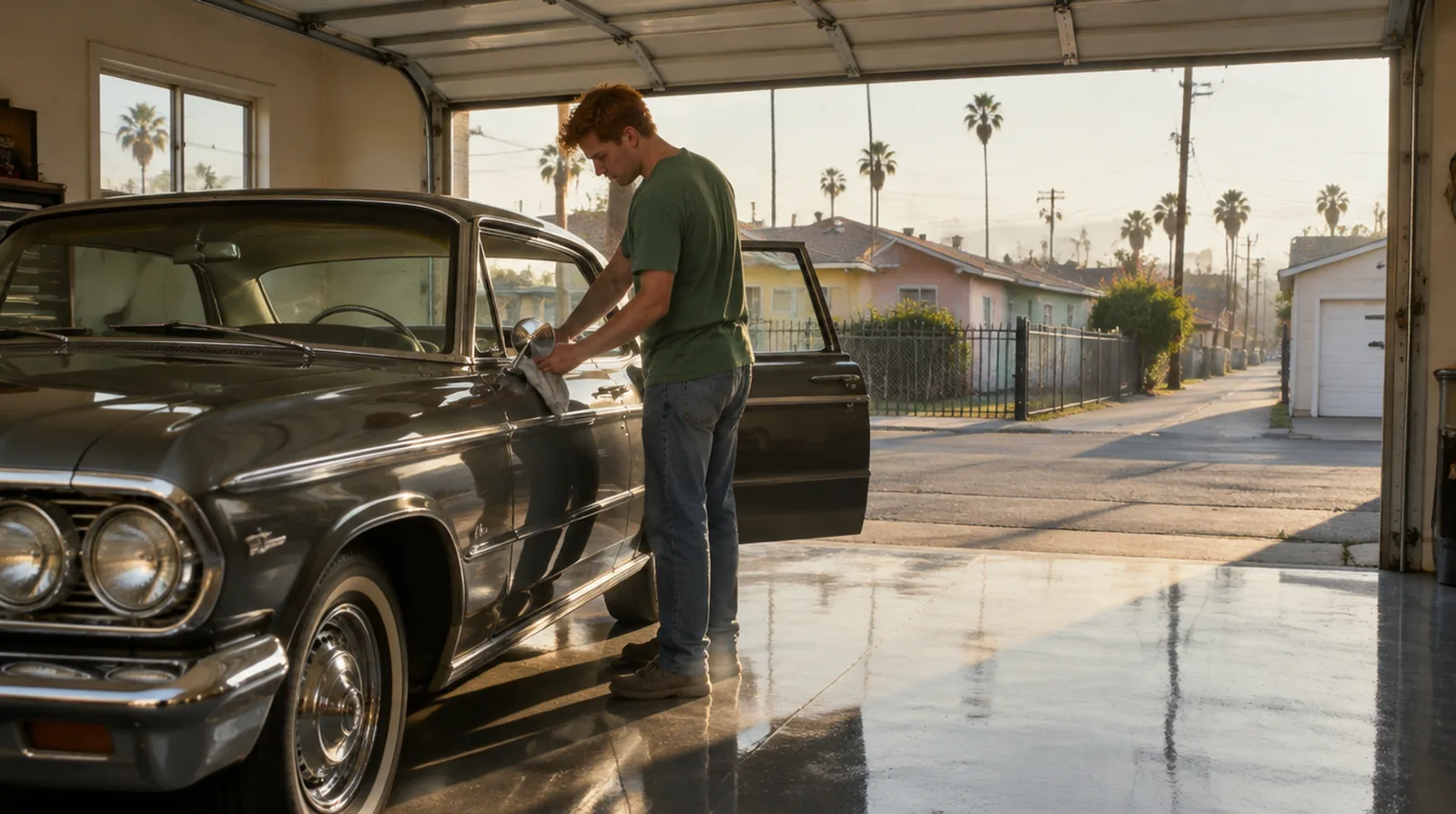
Car culture runs deep in this part of Los Angeles County. In plenty of Lynwood garages you will find a classic that the owner has spent years restoring, a daily driver getting new brakes on the weekend, or a project that is halfway through a rebuild. A coated floor makes that kind of work easier. Dropped bolts are easy to spot, spilled fluids wipe up instead of soaking in, and a creeper rolls smoothly instead of catching on cracks and pits.
For working car garages we usually recommend a full epoxy system with a chemical-resistant topcoat. Brake fluid, coolant, gasoline and solvents all end up on the floor sooner or later, and the topcoat is what keeps them from softening or staining the finish. A light texture adds grip without making it hard to roll a jack or a creeper.
Floor color for a show car
Owners who keep a show car in the garage often choose a solid dark gray or black base with a gloss finish so the car stands out, or a light gray that brightens the space for photos. A subtle flake blend is a practical middle ground: it still looks clean but hides the small marks a working garage collects.
Jacks, lifts and heavy equipment
Floor jacks and jack stands are fine on a properly built coating. If you plan to install a two-post lift, tell us before we start. The anchors need sound, thick concrete, and we can coordinate so the lift is placed on concrete that has been checked and the coating is finished around the base plates.
Garage question
Will a hot exhaust or a dropped torch damage it? Very hot items can mark any coating. Use a mat under welding or grinding work.
Upgrade your working garage
Call (310) 881-8826.