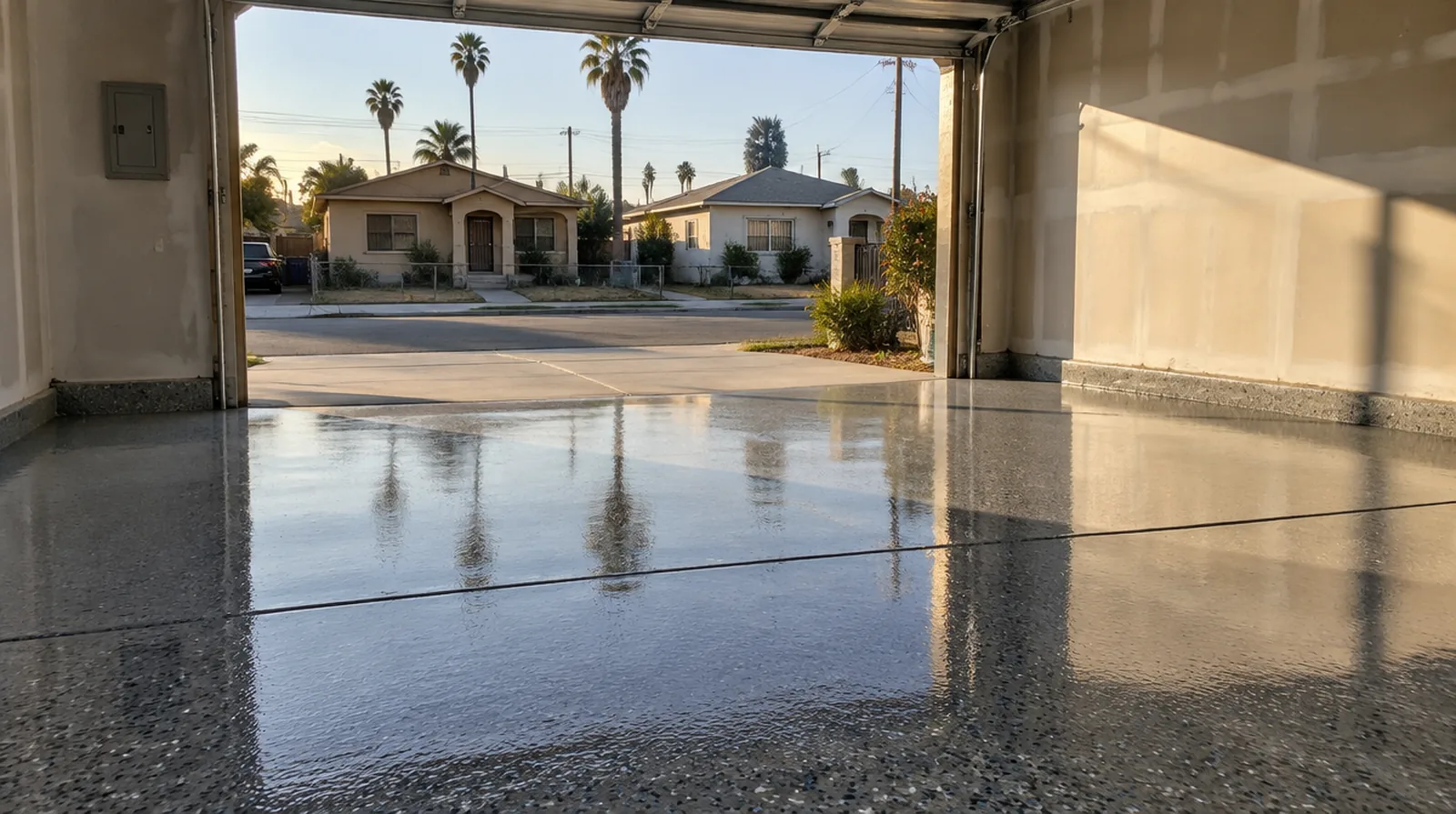
Garages that actually get used
In Lynwood, a garage is rarely empty. It might be a mechanic's bay for the family cars, a weight room, a place to store inventory for a side business or a spot to throw a party when the weather is nice, which is most of the year. Many homes in town date from the 1940s and 1950s, and their detached garages sit behind the house off a driveway or alley. That concrete has seen decades of oil and wear.
We take those old slabs, grind them back to sound concrete, rebuild broken edges and put down a floor that wipes clean.
Where we work
Homes around Lynwood City Park, the blocks off Long Beach Boulevard and Atlantic Avenue, neighborhoods north and south of Imperial Highway, and the streets near the 105 and 710 interchange. On the commercial side, auto shops, tire shops, body shops, warehouses and storefronts along the main corridors.
What we put down
- Garage epoxy built for real use
- Flake floors that hide stains and give grip
- Fast polyaspartic when you cannot lose the garage for long
- Metallic epoxy for a party room or home gym
- Pool deck coating that stays cooler and grippy in South LA heat
- Patio coating that ties old and new slabs together
- Shop and warehouse coatings that handle oil, jacks and tools
- Polished concrete, coating repairs and sealers for drives and patios
- Epoxy countertops for kitchens, bars and salon stations
Weather and wear
Lynwood is warm and dry most of the year, with a few short rainy stretches in winter. The biggest enemies of concrete here are heat, dust, oil and heavy use, not cold. A sealed, coated floor stands up to all of it.
I work on cars in my garage. Will the coating hold up?
Yes. We use a chemical-resistant topcoat that handles oil, brake fluid and coolant spills.
My slab is really old and cracked. Can you still coat it?
Usually. We rebuild edges and fill cracks before coating.
Can you coat a garage that has been converted?
Yes, converted rooms are common in our work.
Neighborhood garages between the 105 and the 710
Lynwood is a compact city wedged between the 105 and the 710, and most of its homes sit on narrow lots with garages off an alley or at the end of a long driveway. Those garages are workshops, weight rooms, storage and sometimes extra rooms. We are glad to coat any of them.
What happens between your first call and the first car back inside
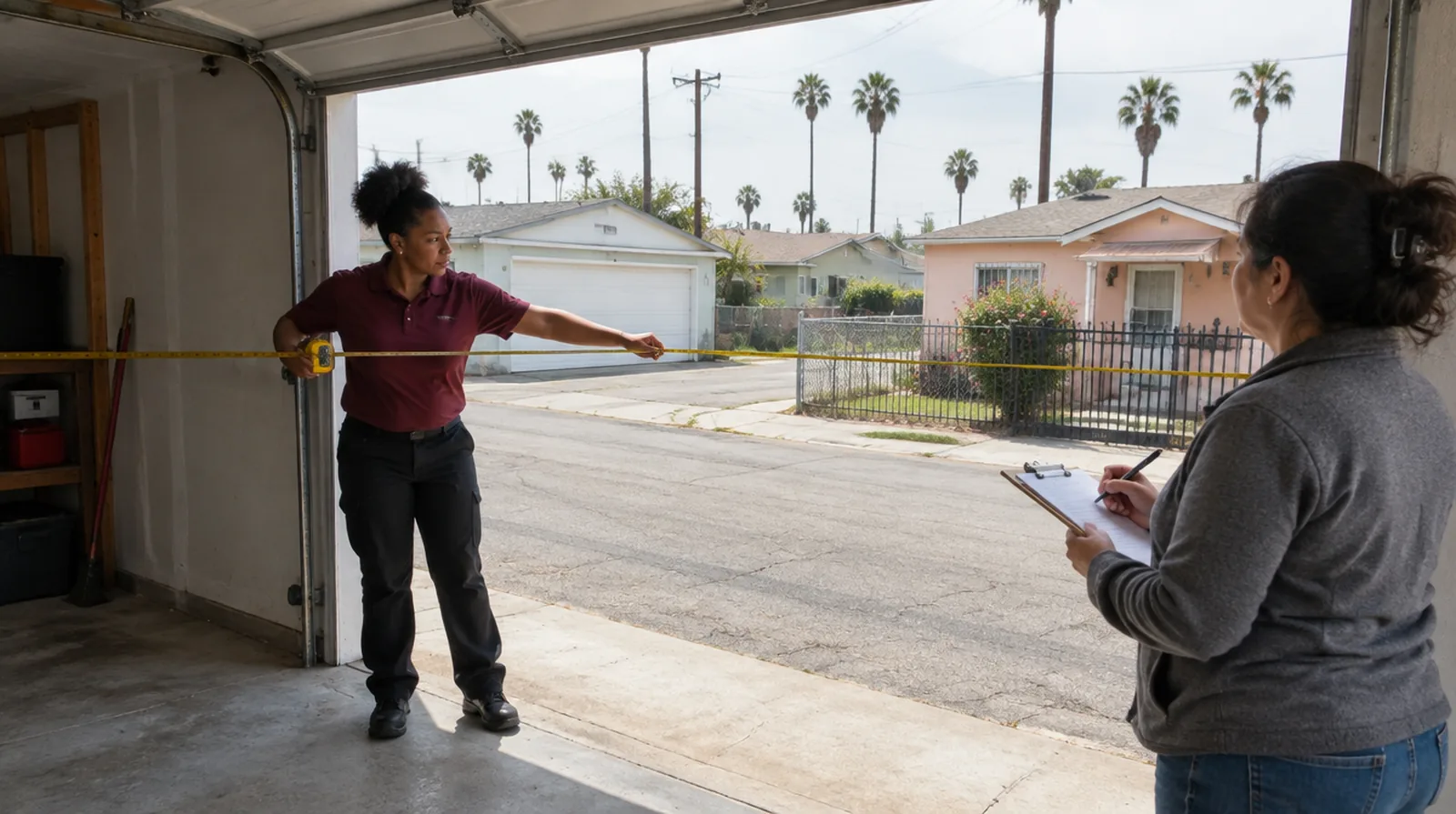
A Lynwood floor project starts at the garage itself, not over the phone. Detached garages here vary a lot. Some were built with the house in the 1940s and still have their original thin slab, some were rebuilt later, and some have been patched so many times that the floor is a quilt of different concrete. We measure every bay, check the slab for moisture, look at how the floor slopes toward the alley or driveway, and ask what the space really does day to day. A garage that holds a project car needs a different plan than one that stores stock for a side business.
The quote you get afterward is in writing and spells out each step: how we will prep the concrete, which cracks and spalls we will rebuild, the coating layers, the color or flake blend, and when you can walk and drive on the finished floor. Nothing is added later without your OK.
Access from the alley
Many garages in town open onto a paved alley rather than the street. That is often good news for us, because equipment can roll straight in without crossing a lawn. It also means the alley stays in use by neighbors, trash trucks and delivery vans. We park so the alley stays open, keep hoses and cords tidy, and make sure our grinder and vacuum are set up inside the garage, not in the path of traffic.
Electrical in older garages
Older detached garages sometimes have a single outlet or a light on a pull chain. Our grinders and dust collectors draw real power. During the first visit we check what circuits are available. If the garage power is limited, we can run from a suitable outlet on the house or bring our own power source, and we explain the setup before install day.
Heat, dust and Santa Ana days
Southeast Los Angeles County stays mild most of the year, but late summer and fall can bring hot spells and dry wind. A slab that has baked in the afternoon sun can shorten the working time of a coating, and blowing dust is the enemy of a clean finish. We start early on hot days, keep the garage door mostly closed during application, and choose products that suit the temperature.
Side businesses and home workshops
A lot of residents run a trade or a small business from home, and the garage is where the work happens. We coat garages that hold landscaping equipment, catering supplies, screen printing presses, upholstery work and online store inventory. For those spaces we talk about where heavy items will sit, whether carts or hand trucks roll across the floor every day, and what liquids might be spilled. That shapes the coating thickness, the texture and the topcoat we recommend, so the floor is built for the work rather than only for parking.
If the garage needs to stay in use, we can also split the job into two halves so some storage stays accessible while the other side is coated.
Local questions
Do you also cover South Gate, Compton, Paramount and Downey? Yes. We also take projects in Bell Gardens, Huntington Park and Willowbrook.
My garage was partly converted. Can you coat the rest? Yes. We coat the open area and finish a clean edge where the converted part begins.
Do I need to be home during the install? Someone should be there at the start and finish. In between, you only need to leave us access to the garage and power.
Can you work on a weekend? Often, yes. Ask when you book, since weekend dates fill first.
Get your floor looked at
Call (310) 881-8826 for a free estimate in Lynwood.