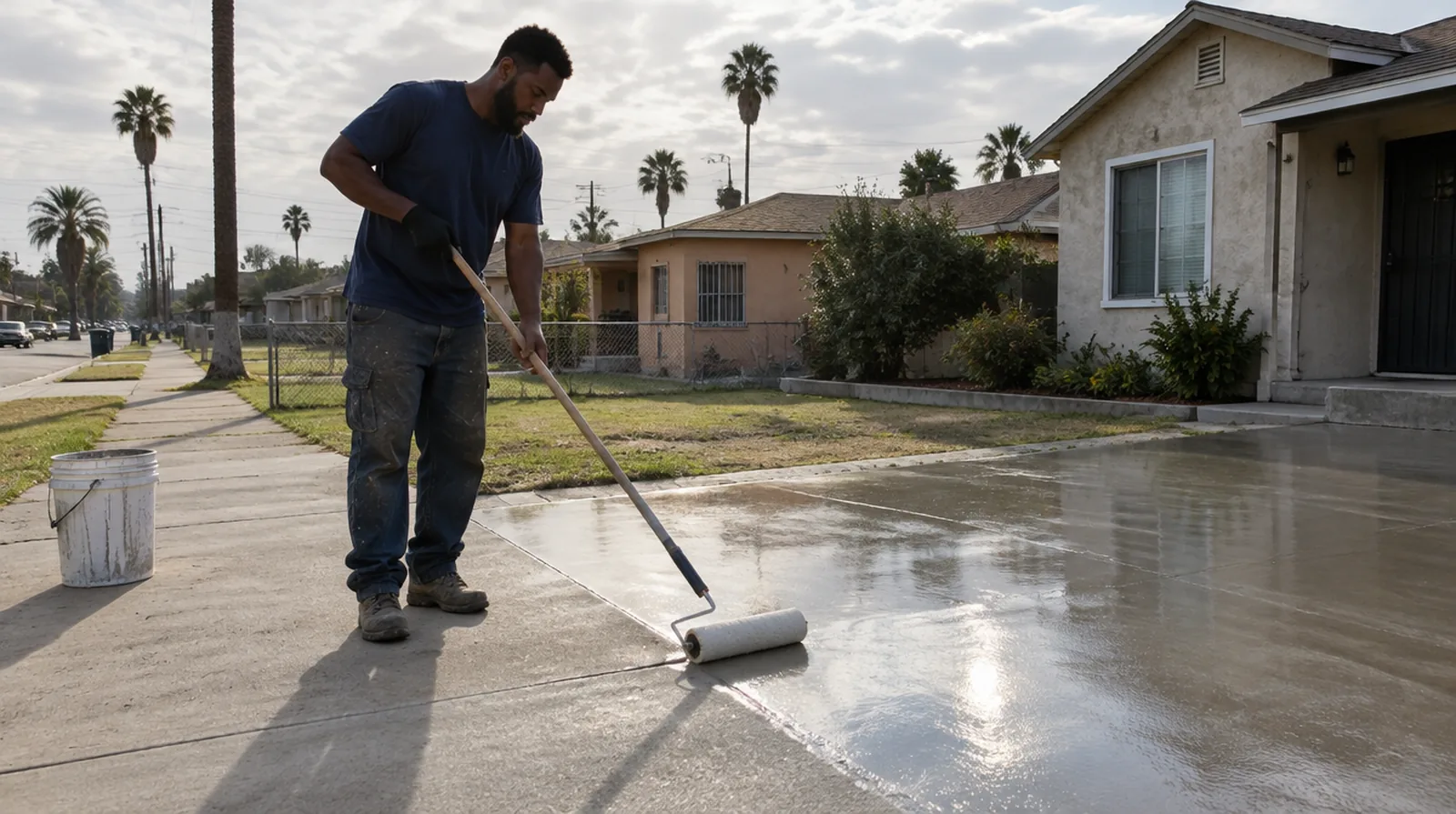
What we seal
Driveways, patios, walkways and shop aprons.
Why seal
Oil drips and sun damage bare concrete. A sealer helps it resist stains.
How often to reseal?
Every few years.
Long driveways and alley aprons
Many Lynwood lots have a long driveway running to a detached garage in back, or an apron off the alley. Those strips collect oil from every car that parks on them. Before sealing, we degrease and pressure-wash, then pull up as much old oil as we can with a poultice. The sealer goes on after the concrete dries, so new drips sit on top long enough to wipe off. We use penetrating products that keep the surface's natural grip.
Backyard patios
Patios used for family gatherings see grease from the grill, spilled drinks and sun all year. A sealer makes cleanup easier and keeps the slab looking newer longer. For colored or stamped patios, a tinted sealer can bring back faded color.
Concrete sealing for Lynwood homes and shops
Long driveways, alley aprons, backyard patios and front walks in Lynwood take a beating from oil drips, tire marks, sun and the occasional heavy rain. Concrete sealing in Lynwood keeps stains near the surface so they wash off, slows fading and helps concrete shed water instead of soaking it up.
Before we seal
We pressure wash, degrease oil spots and let the concrete dry fully. Older stains may lighten rather than vanish, and we will tell you what to expect before we start. Sealing over a clean, dry surface is what makes the finish last.
Sealing questions
Will it make the driveway slick? Penetrating sealers keep the same texture. If we use a film sealer, we add grit.
Can you seal a shop apron? Yes, with a tougher sealer for heavy vehicles.
Do you seal stamped patios? Yes, and it can bring back faded color.
When is the best time? Spring or fall, or early mornings in summer.
Alley aprons and side yards
The strip of concrete between your garage and the alley takes trash bins, trucks turning and runoff. Sealing it, along with side yards and walkways, keeps grime from soaking in and makes a quick hose-down enough to clean it. We can do the whole property in one visit so everything matches.
Reseal schedule
Every few years for sunny driveways.
Front walkways, steps and the concrete people see first
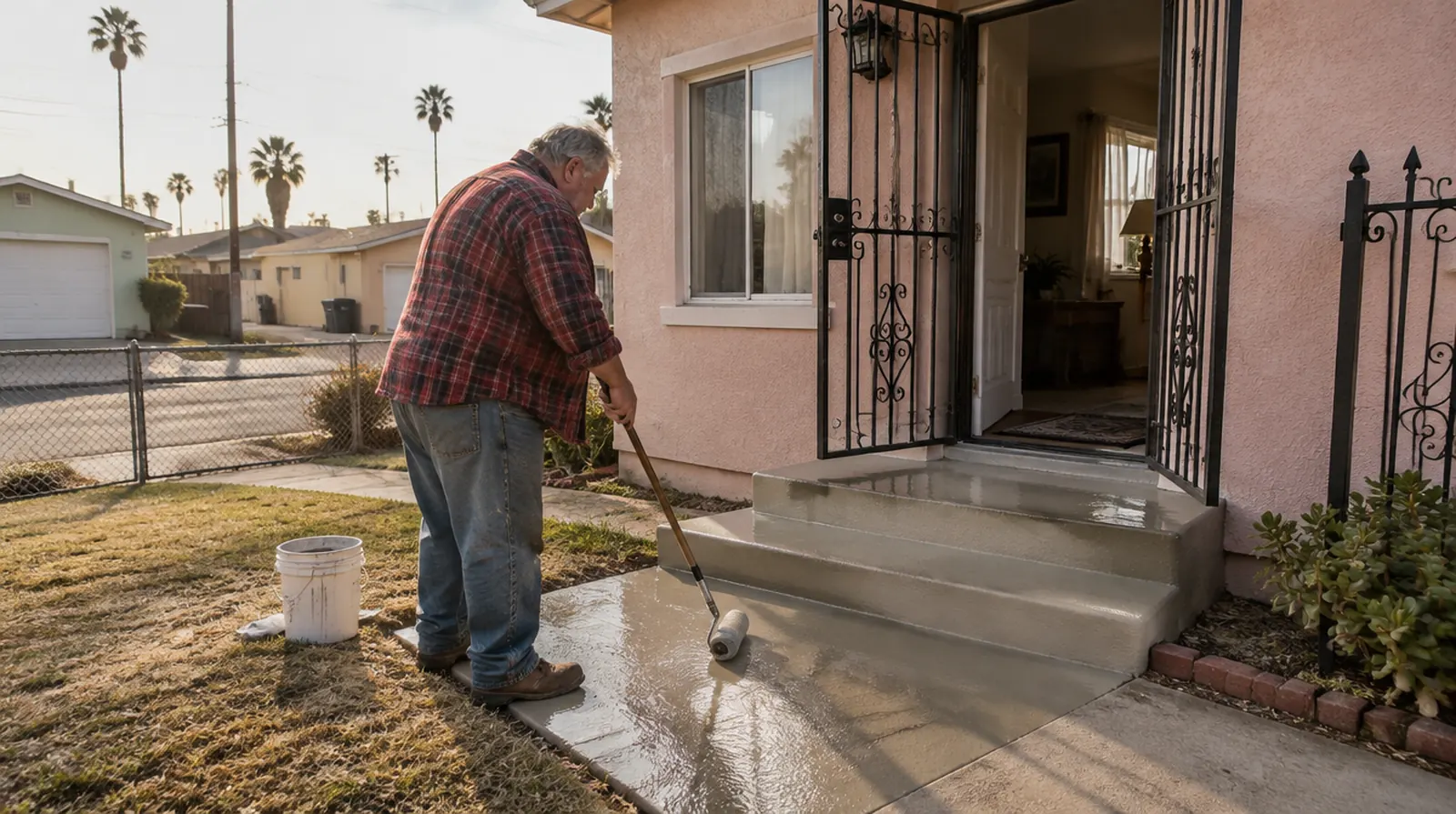
The concrete at the front of a Lynwood home, the walkway from the sidewalk, the steps up to the porch and the small landing at the door, is the first thing visitors see. Years of sun, sprinklers and foot traffic leave it dull and stained. A good cleaning and a quality sealer refresh the look and protect it.
We start by washing the concrete thoroughly, removing dirt, mildew and loose material. Rust stains from iron gates and railings can sometimes be lightened before sealing. Once the surface is dry, we apply the sealer evenly, working around gates, mailboxes and planters.
Sprinkler and hard water stains
Lawn sprinklers often spray onto front walks, and the minerals in the water leave white or tan spots. Sealing makes those deposits easier to wipe off, and adjusting sprinkler heads to avoid the concrete helps even more.
Choosing a finish
A penetrating sealer keeps the natural look and texture of the concrete. A topical sealer adds a slight sheen and deepens the color. On steps we usually recommend a penetrating sealer or a topical one with a non-slip additive for better footing.
Driveways and side yards too
While we are at the house, many owners also have us seal the driveway, the side yard path to the backyard and the patio. Sealing everything at once keeps the concrete looking consistent and saves a second trip. Oil spots on the driveway are cleaned and treated first so they do not darken under the sealer.
Most concrete around the home benefits from a fresh coat of sealer every few years, depending on sun and traffic.
Sealing question
How long before we can walk on it? Usually a few hours for foot traffic. We give exact times for the product used.
Seal your concrete
Call (310) 881-8826.