What we see
Kit coatings peeling under hot tires, chips from tools, worn areas in shops.
Our repair approach
Find the cause, remove failed coating, grind and repair the slab and recoat with a proper system.
Hiding repairs
A flake floor hides repair areas.
Can you patch?
Sometimes; a full recoat is often better.
Why did it fail?
Usually poor prep.
Shops and heavy use
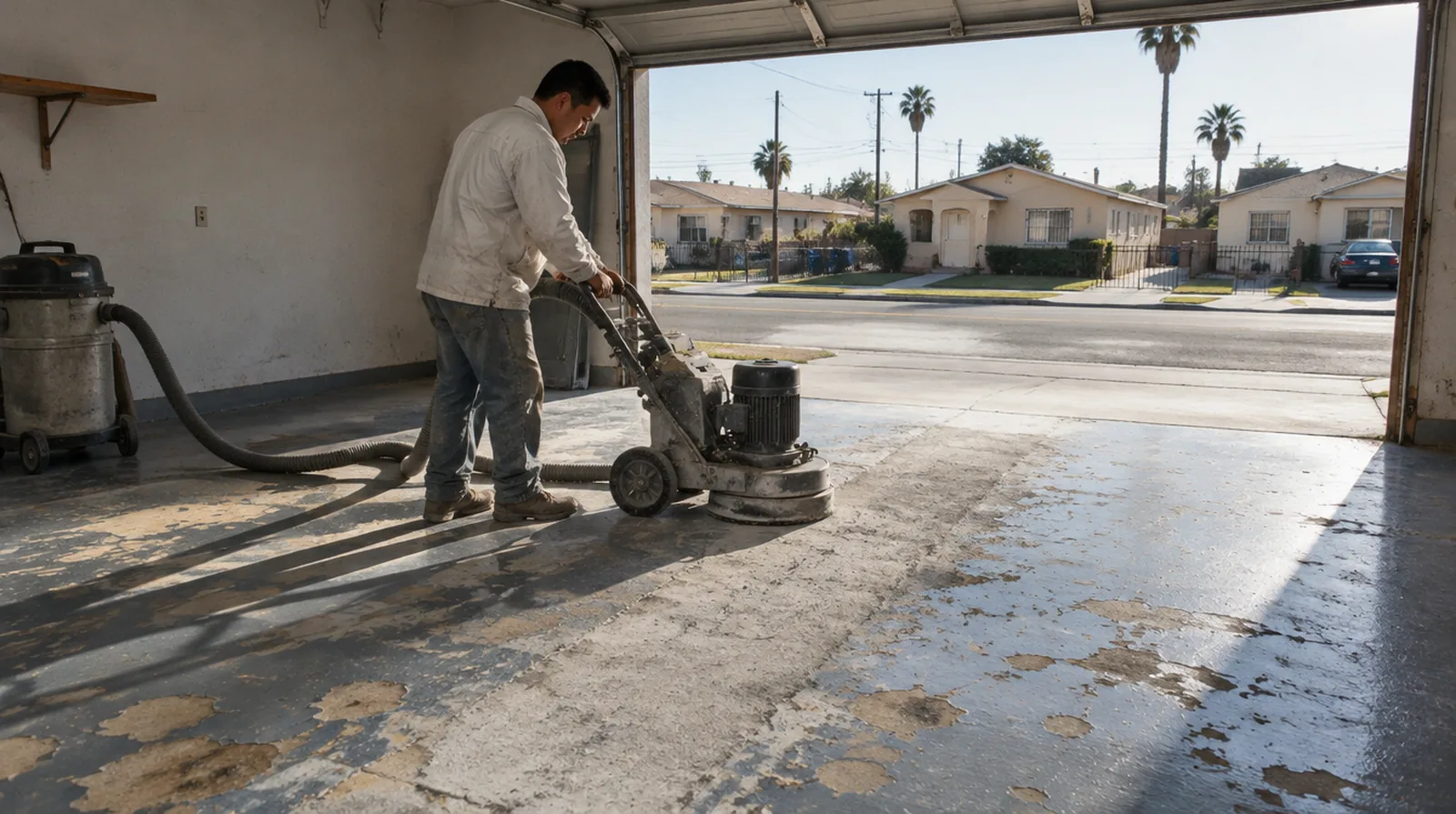
In auto shops, coatings fail first under jack stands, near lifts and where creepers roll. We can grind and rebuild just those areas with a thicker, more impact-resistant system while the rest of the bay stays in service. Fast-cure products help get bays back to work quickly.
Home garages with kit coatings
Many store-bought kits in Lynwood garages lift where the tires park after a hot summer. A kit rolled over unground concrete has nothing to grip. The fix is to grind it all off and install a real system.
Signs to watch
Lifting edges, white powder under the coating and gummy spots under tires all point to failure. The sooner we look, the smaller the repair.
Fixing coated floors in Lynwood
Epoxy floor repair in Lynwood often involves shop floors worn through at jack points and lift bases, home garages coated with kits that peeled under tires, and coatings stained or softened by solvents. Older slabs with wide cracks can also reflect through coatings over time.
How we repair
We test bond strength, mark loose areas and look for the cause. Worn areas get ground back and rebuilt with thicker material. Cracks get filled with the right filler for their movement. A new clear coat over the whole floor can bring back the gloss.
Repair questions
Can you repair a shop floor over a weekend? Often, yes.
Will solvents damage it again? We can use a more chemical-resistant topcoat.
Can you redo a garage floor completely? Yes, by grinding off the old coating.
Warning signs worth a call
Peeling at tire paths, soft spots where solvent spilled, white haze, and edges lifting at the garage door all mean water or chemicals are getting under the coating. The damage spreads every time a tire or jack rolls over it, so calling early keeps the repair smaller and cheaper. Send a photo and we can often tell you what we expect before we even visit.
Old garage paint, mastic and patchwork floors
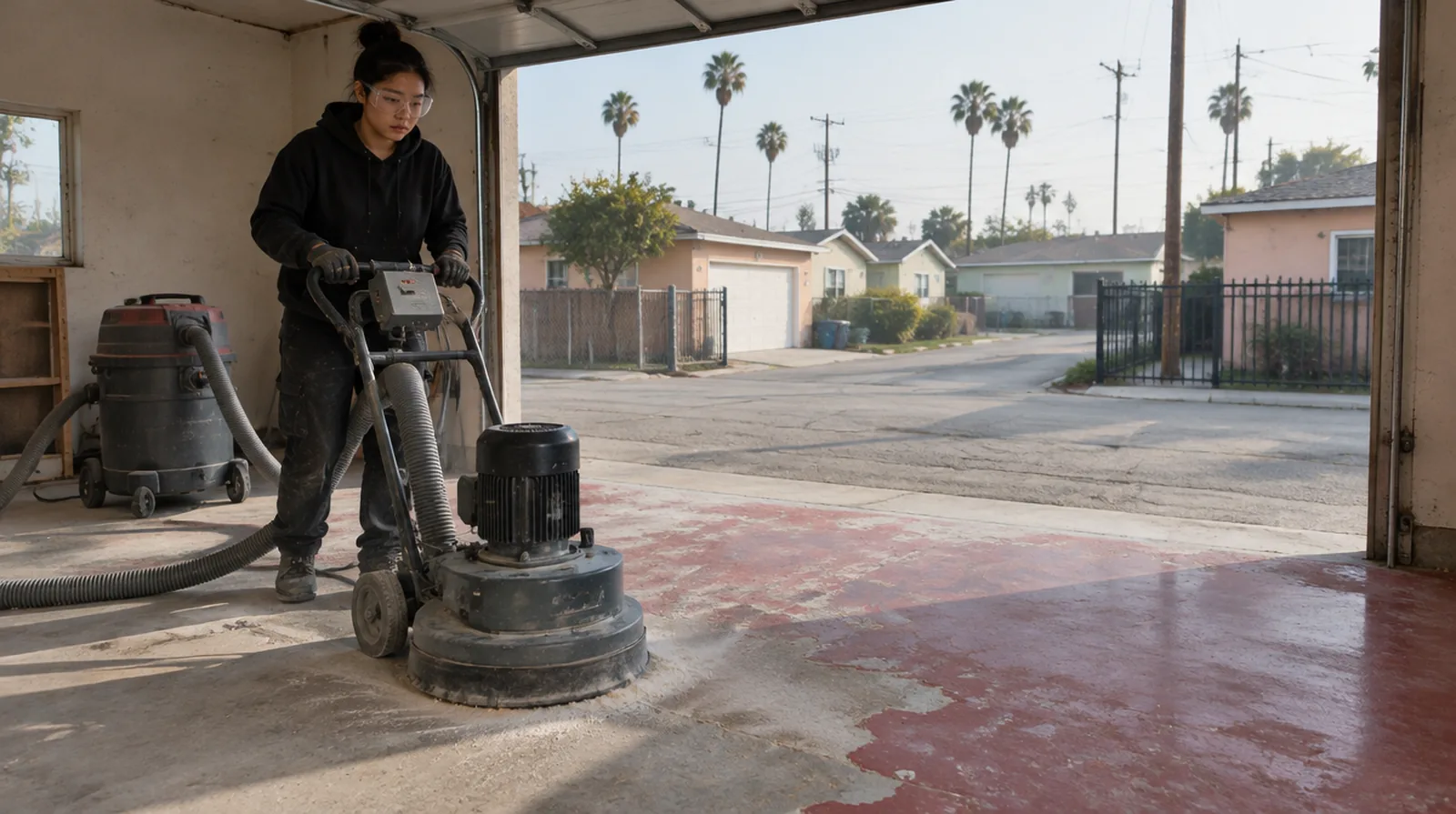
In a city where many garages are seventy or more years old, the concrete has usually been covered with something along the way. We regularly find layers of red or gray porch paint, black tile mastic from an old vinyl floor, carpet glue from a converted room, or a store-bought coating that has worn through in the tire paths. All of it has to come off before a new floor can bond.
We remove these layers with diamond grinding and, where needed, a scraper. A dust shroud and vacuum keep the dust down. Once the slab is bare, we can see the real condition of the concrete: cracks, low spots, broken edges at the garage door, and old patches that have come loose. Each of those gets repaired before coating.
When a coating can be repaired in place
If your floor was professionally installed and is mostly sound, a small damaged area can often be ground out and patched without redoing the whole garage. The color match will be close but not exact, so we sometimes suggest a fresh clear topcoat over the whole floor to blend it.
Why old paint fails
Paint on bare concrete is thin and has little bond. Hot tires lift it, water gets under it, and it peels in sheets.
Broken edges at the garage door
The front edge of a garage slab takes a beating from tires and weather. When it crumbles, we cut back to solid concrete and rebuild the edge with a repair mortar before coating, so the new floor has a clean, square start.
Repair question
How long does removal add to the job? Usually a few hours to a day, depending on how many layers there are.
Fix your floor
Call (310) 881-8826.